
Beyond These Stars Beginner's Guide: Settlement, Kewa & Survival
Complete Beyond These Stars beginner's guide covering the 16-tile Peep housing radius, Home Spaceship transition, glacier river terraforming, and Kewa care.
How Does Settlement Building Work on Kewa’s Back?
In Beyond These Stars, your civilization does not settle on a static planet—you build directly across the hexagonal, living carapace of Kewa, a sentient Space Whale drifting through the cosmos. Because Kewa is alive, every industrial decision you make feeds back into the biome. Strip-mining rock, letting factory soot accumulate, or failing to irrigate dry forests does not just hurt your citizens (Peeps); it physically injures Kewa and alters how your whale navigates the galaxy.
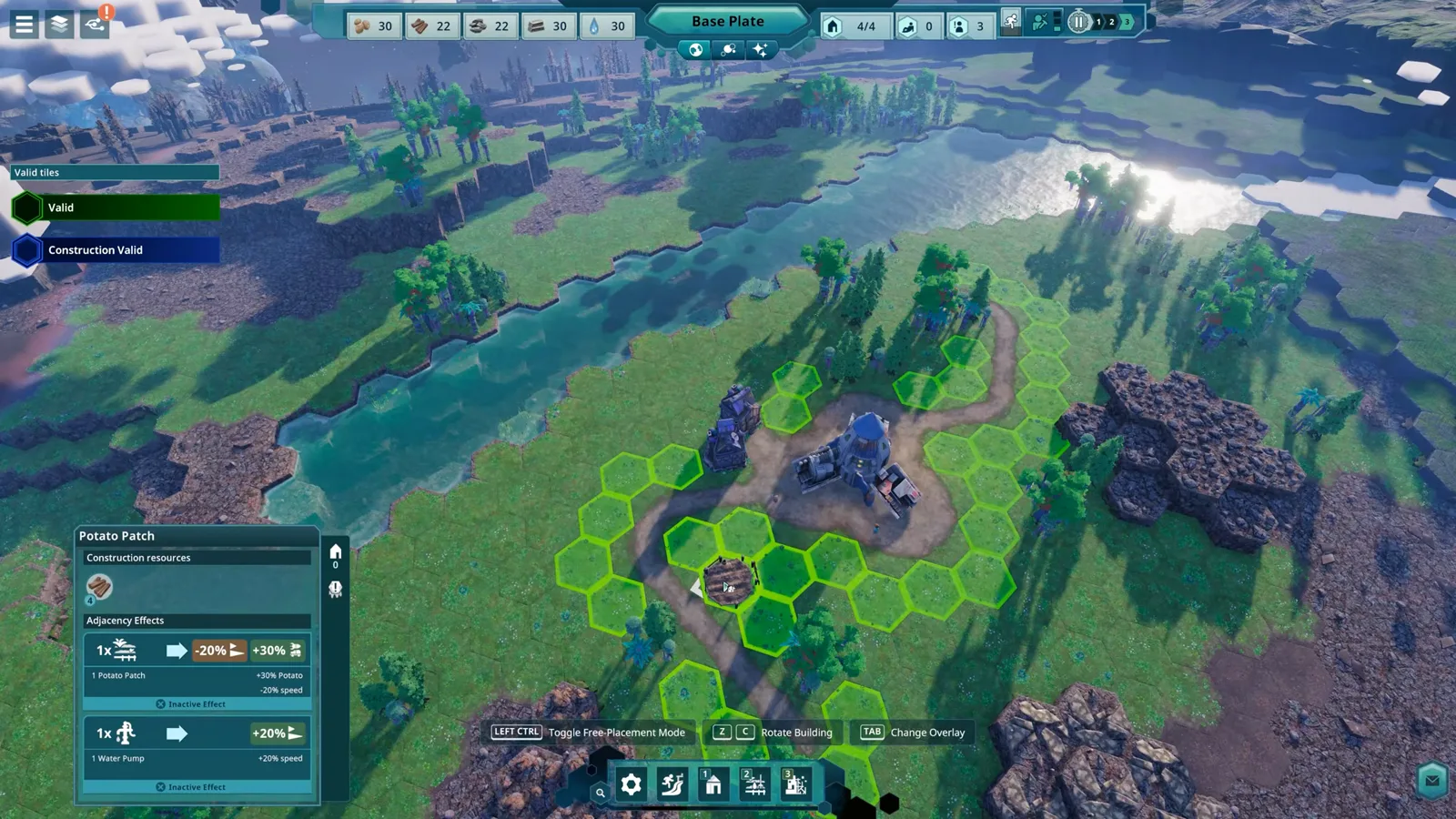
Your primary objective during the opening hours is to transition from a fragile landing camp dependent on the Home Spaceship into a self-sustaining hexagonal canopy city capable of launching Jose’s Scout Spaceship into the wider galaxy.
What Should You Build First After Landing?
When your Home Spaceship touches down in the central valley on Kewa’s back, it acts as an all-in-one starter hub. The ship provides initial storage and can slowly fabricate Wood, Stone, Iron, and Tools with zero pollution. However, relying on the ship for too long will stall your tech progression.
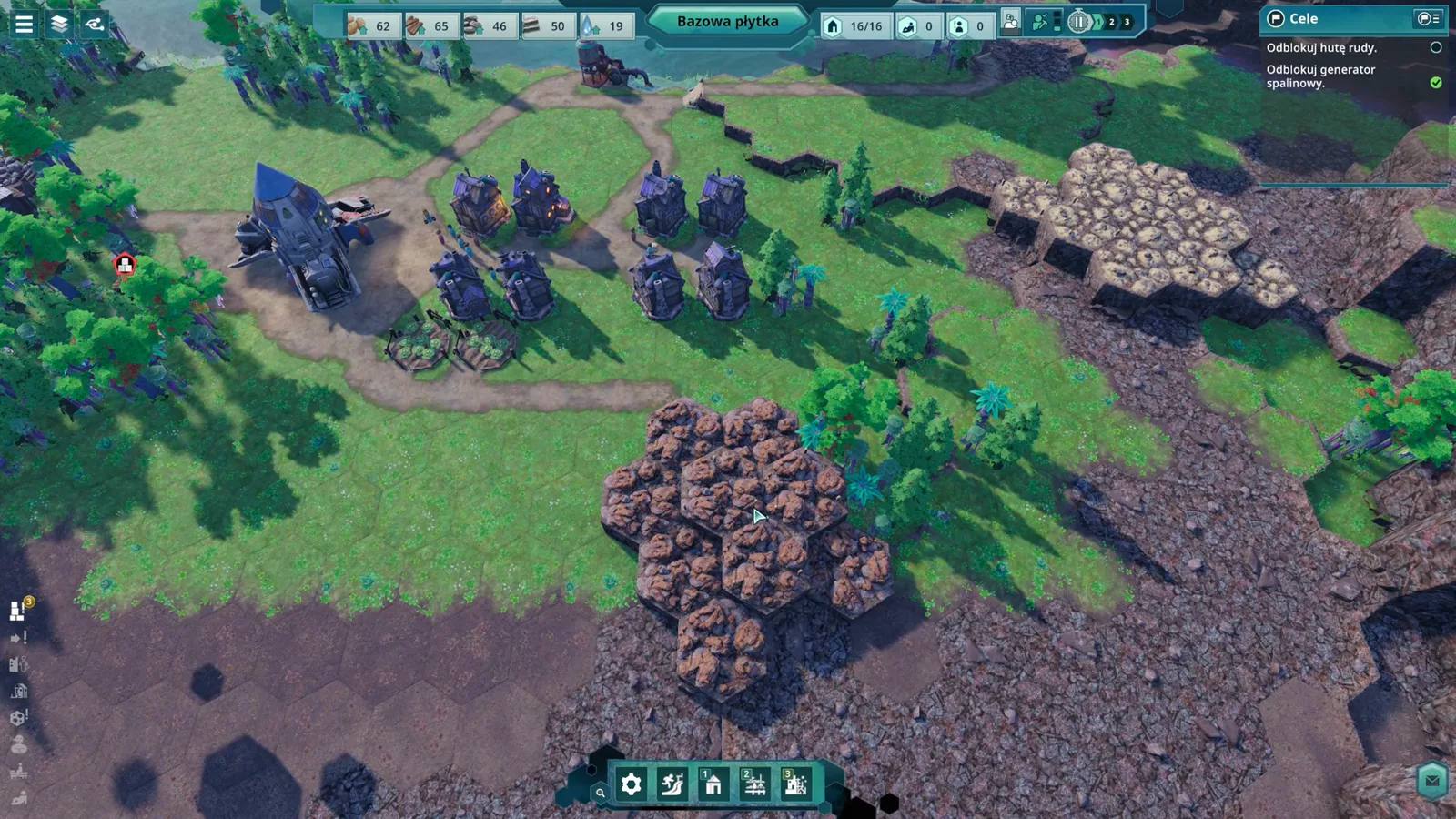
Step-by-Step Opening Build Order
- Establish a Housing & Potato Core: Place 3–4 Huts (6 Wood each, houses 5 Peeps) on grassy tiles near your ship. Immediately place 2 Potato Patches (4 Wood each) adjacent to your Huts to trigger the +20% Peep Happiness adjacency bonus.
- Secure Coastal Water: Build a Water Pump (6 Wood) on a coastal outcropping surrounded by 3 water tiles to unlock its +30% storage capacity bonus.
- Harvest Forest Canopy: Place a Woodcutter (4 Wood) surrounded by 5 Forest hexes (leaving 1 hex for the road connection) for another +30% storage bonus. Do not clear-cut the trees—Woodcutters sustainably harvest living forest tiles!
- Launch Research Early: Construct a Research Lab (8 Wood, 6 Stone) and assign 2 Peeps to begin generating Knowledge so you can unlock the Ore Smelter, Toolsmith, and Landscaper technologies.
For a minute-by-minute breakdown of this opening sequence, follow our First 100 Minutes Walkthrough and review all Building Adjacency Bonus Layouts.
Why Must You Pause the Home Spaceship Production Slots?
One of the most common progression roadblocks in Beyond These Stars happens when you research Compost Heap or By-Product Yard and realize you have zero Wood Waste, Soot, or Slag in storage.
| Production Source | Primary Output | Secondary By-Product | Pollution Level |
|---|---|---|---|
| Home Spaceship | Wood, Stone, Iron, Tools | None (0 By-Products) | None |
| Woodcutter / Sawmill | Wood / Plank | Wood Waste (needed for Compost) | None / Low |
| Ore Smelter | Copper / Iron | Soot & Slag | Medium |
| Toolsmith | Tool | Slag | Low |
| Metal Smelter | Steel | Soot & Slag | High |
See our complete Resources & By-Product Production Chains Guide for every conversion formula in the game.
How Do Roads, Oxygen, and Water Fertility Interact?
Every hex tile on Kewa’s back has three environmental properties that govern what can live or work there: Atmosphere (Oxygen), Water Access, and Fertility.
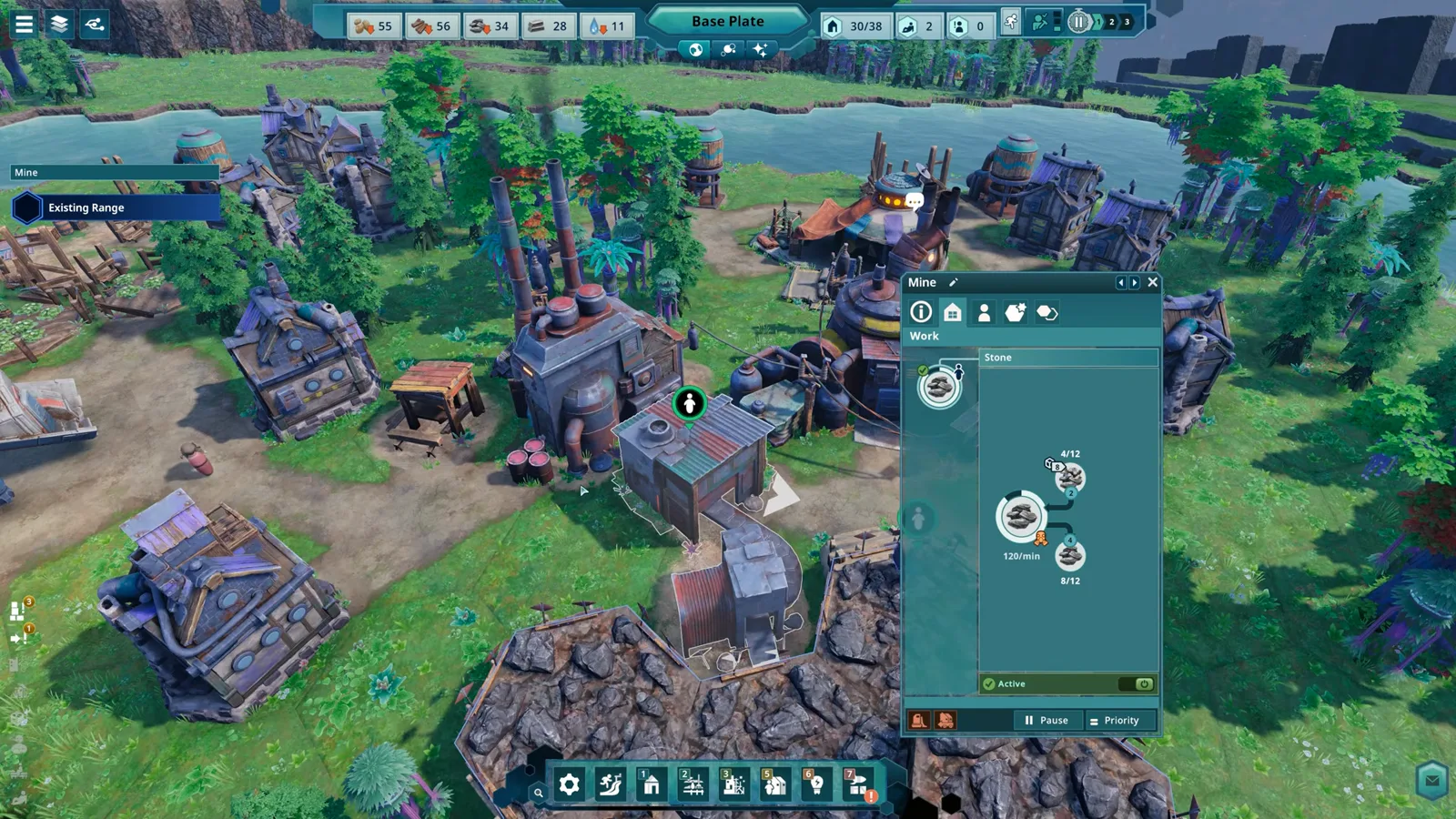
1. Breathable Atmosphere (The 4-Tile Forest Rule)
Peeps cannot work or live on tiles lacking oxygen. Watered Forests project breathable atmosphere up to 4 hex tiles in every direction. Dry Forests produce zero atmosphere and zero fruit buffs until water reaches within 4 tiles of their roots.
2. Water & Dirt Fertility
- Watered Tiles: Any hex within 4 tiles of fresh water is automatically watered, turning barrenDirt into Lush Grass.
- Fertile Tiles: A hex becomes Fertile when it has both Water and Dirt.
- Fruit Plantation Bonus: Placing a Fruit Plantation within 4 tiles of a watered Forest grants a +20% harvest yield bonus.
3. Breaching the Glacier River Toward the Copper Vein
In the starting valley, a natural channel of glacier water is blocked by rocky ridges, leaving the eastern Forests dry and the Copper Ore deposit outside your breathable zone. Once you unlock the Landscaper, assign it to excavate the blockage so water floods down the riverbed toward the Copper vein. As the water flows, adjacent dry Forests instantly revive, extending your oxygen canopy over the Copper deposit without needing a single Sapling! Learn more in our Terraforming Waterways & Compost Guide.
How Do Power Conduction and Pollution Work Together?
When you unlock your first powered industrial buildings—the Ore Smelter and Toolsmith—you will not yet have the Copper required to string Power Lines (which cost 1 Copper + 1 Wood per pole).
Instead, Beyond These Stars uses a Touching Conduction Rule: any powered building that physically touches a Burner Generator—or touches another powered building that touches the generator—receives electricity automatically. You can chain an Ore Smelter, Toolsmith, and Burner Generator in a tight triangle to bootstrap Copper smelting before building a single Power Line. Read our Power Grid & Conduction Guide for full layouts.
Be careful: industrial buildings emit Pollution. If high pollution remains uncleaned on a hex for 15 minutes, that tile mutates into an impassable Toxic Area that damages Kewa and causes Peep sickness. Always buffer industrial clusters with watered Forests and Cleaners, as detailed in our Pollution & Toxic Area Cleanup Guide.
Quick Checklist: Ready to Launch the Scout Spaceship?
- Housing & Food: At least 2 food types (Potatoes + Fruit or Bread) and 1 Water Pump keeping Peeps above 50% Happiness (see Peeps Happiness & Strikes).
- Industrial Core: Dedicated Woodcutter, Quarry, Ore Smelter (Iron + Copper), and Toolsmith running with Home Spaceship slots paused.
- Ecosystem Stability: Glacier waterway opened via Landscaper; Compost Heap and Tree Nursery producing Saplings.
- Spaceport Ready: Spaceport constructed and stocked with Fuel and Materials to launch Jose’s Scout Spaceship (see Galaxy Map & Outposts Guide).

Beyond These Stars Official v1.0 Launch Overview Trailer
Frequently Asked Questions
What is the maximum distance Peeps will walk to work?
Why am I not getting Wood Waste, Soot, or Slag?
How do I expand breathable atmosphere on Kewa's back?
How does power work before researching Power Lines?
Does Kewa's health affect my settlement?
Related Sector Guides
buildings
Building Adjacency Bonus Layouts: Optimal Hex Grids & Buffs
Complete Beyond These Stars building adjacency bonus guide: exact hex placement rules for +30% Water Pump & Woodcutter storage, +20% Hut happiness, and more.
buildings
All Buildings List: Costs, Workers, Power & Tech Tiers
Complete database of 55+ buildings in Beyond These Stars v1.0: construction costs, worker slots, power consumption, pollution tiers, and research unlocks.
buildings
Power Grid & Generators Guide: Touching Rule, Wires & Batteries
Master electricity in Beyond These Stars: how the pre-wire touching conduction rule works, Burner vs Fuel vs Solar Generators, Power Lines, and Battery backups.
Did this telemetry guide help your settlement?
Transmission received — thank you!